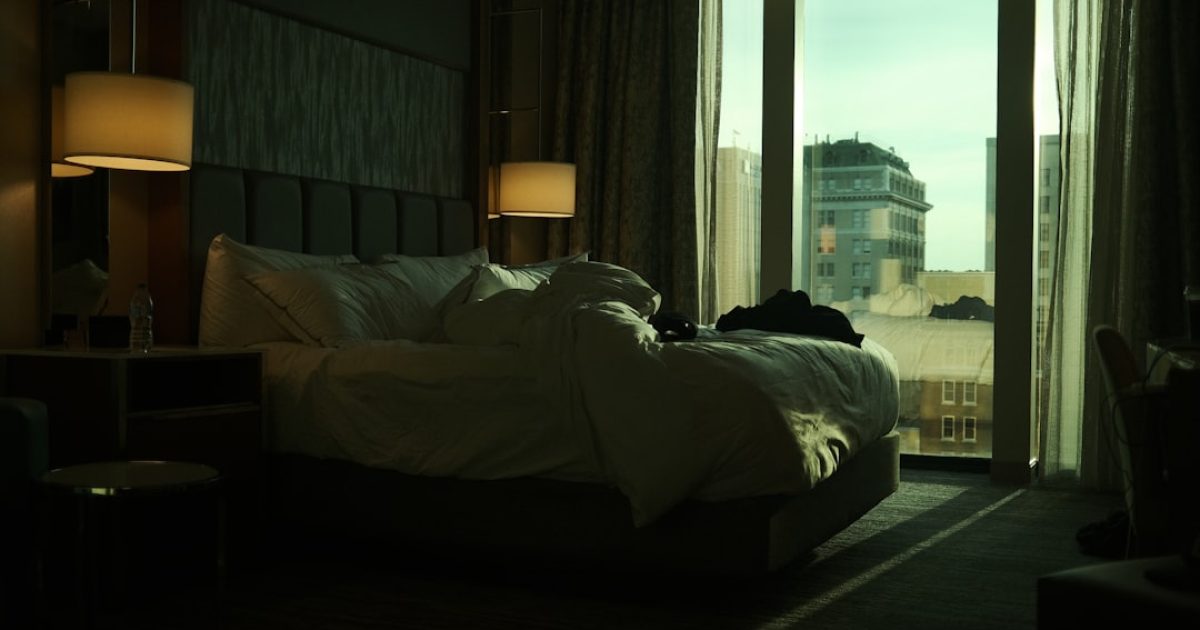
Every hotel photo is, by definition, the best angle of the best-lit moment in that room. That's not necessarily dishonest - it's just marketing. The problem is figuring out how much distance there is between that best-case photo and what you'll actually get, and most people only learn to spot the signals after being disappointed once.
Why Photos Are Rarely an Outright Lie - Just Incomplete
Hotels rarely fabricate a room that doesn't exist. What happens more often is selective framing: the one room with a slightly better view gets photographed and used to represent the whole category, a wide-angle lens makes a small room look roomier than it is, or the bathroom - often the actual dealbreaker for guests - simply isn't shown at all.
The Signals Worth Checking
No bathroom photo
This is the single most reliable red flag. A genuinely nice bathroom almost always gets photographed, because it's cheap, easy content that sells the room. When a listing shows the bed, the desk, the view - and skips the bathroom entirely - it's a reasonable bet that the bathroom is the weakest part of the room.
Only wide, empty shots
Wide-angle lenses (common in real estate and hotel photography) make rooms look larger than they are by design - it's a legitimate photography technique, not necessarily deception, but it does mean you should discount the apparent size somewhat. If every photo is a wide empty-room shot with no close-ups of the bed, desk, or seating area, you're seeing space, not detail.
Suspiciously generic, stock-style photography
If every photo looks like it belongs in a furniture catalogue - identical staging, no personality, sometimes even watermarked as stock - it may not represent the actual property, but a similar showroom room or a sister property. This is more common with newer or smaller independent hotels that haven't done a proper in-house shoot yet.
Photos that don't match the room type you're booking
The hero photo on a listing is often the top room category, even when you're booking the cheapest available rate. If there's no distinct photo set for your specific room type (e.g., "Standard" vs "Deluxe"), assume you may be seeing an upgrade you're not actually paying for.
Quick Reference: Reading the Signals
| What You See | What It Likely Means | What to Do |
|---|---|---|
| No bathroom photo at all | Bathroom is probably dated or small | Check recent guest photos in reviews specifically |
| Only wide empty-room shots | Size may be visually exaggerated | Cross-check the stated square footage/meters |
| Generic, catalogue-style photos | May not be this exact room or property | Look for guest-uploaded photos to confirm |
| One hero photo, no room-type breakdown | You may be seeing an upgraded category | Message the property to confirm your specific room |
| Recent, varied, slightly imperfect photos | Usually an honest, current listing | Good sign - proceed normally |
The Fastest Cross-Check: Recent Guest Photos
Almost every booking platform now lets guests upload their own photos alongside reviews, and this is the single best correction to an overly flattering listing. Guest photos are taken on phones, in normal lighting, without staging - if ten different guests' bathroom photos all look consistent with the listing, you're probably safe. If they look noticeably different, trust the guest photos over the listing.
What Room Dimensions Actually Tell You
A stated size ("28 sqm") is one of the few numbers on a listing that can't really be staged, and it's worth reading alongside the photos rather than instead of them. As a rough anchor: under 20 sqm is genuinely compact (fine for a short stay, tight for a week with luggage), 20-30 sqm is a comfortable standard room, and above 35 sqm usually means a proper sitting or work area, not just a bigger bed.
Compare real rates before you commit
See live pricing and availability across thousands of properties.
When Ambiguity Is Still High: Just Ask
If after all this you're still unsure, message the property directly and ask for a current photo of the specific room type and rate you're booking. Most hotels will happily send one, and a property that's reluctant to do this is itself a signal worth paying attention to.
Common Mistakes
Judging the whole hotel by one hero image. A beautiful lobby or rooftop pool photo says nothing about the room you're actually sleeping in - always look for room-specific photos before assuming the whole property matches that one great shot.
Ignoring the photo date. Some listings run years-old photos taken before a renovation - in either direction. Recent guest photos are the best defense against this, since they're naturally dated to when the trip happened.
Assuming more photos always means more transparency. A large photo count with no bathroom shot and no close-ups is still an incomplete picture, regardless of volume.
Frequently Asked Questions
Is a missing bathroom photo always a bad sign?
Not always, but it's the single most common thing hotels omit when the bathroom isn't a selling point - worth checking guest photos specifically before booking.
Do wide-angle photos count as misleading?
Not inherently - it's standard practice - but you should mentally discount apparent size and check the stated square footage instead.
What's the fastest way to verify a listing?
Guest-uploaded photos in recent reviews, cross-checked against the listing's own photos for the same room type.